Contents
Exhibitions
Masako Ando: Ordinary Days
Dates : March 14 (Saturday) – September 6 (Sunday), 2026
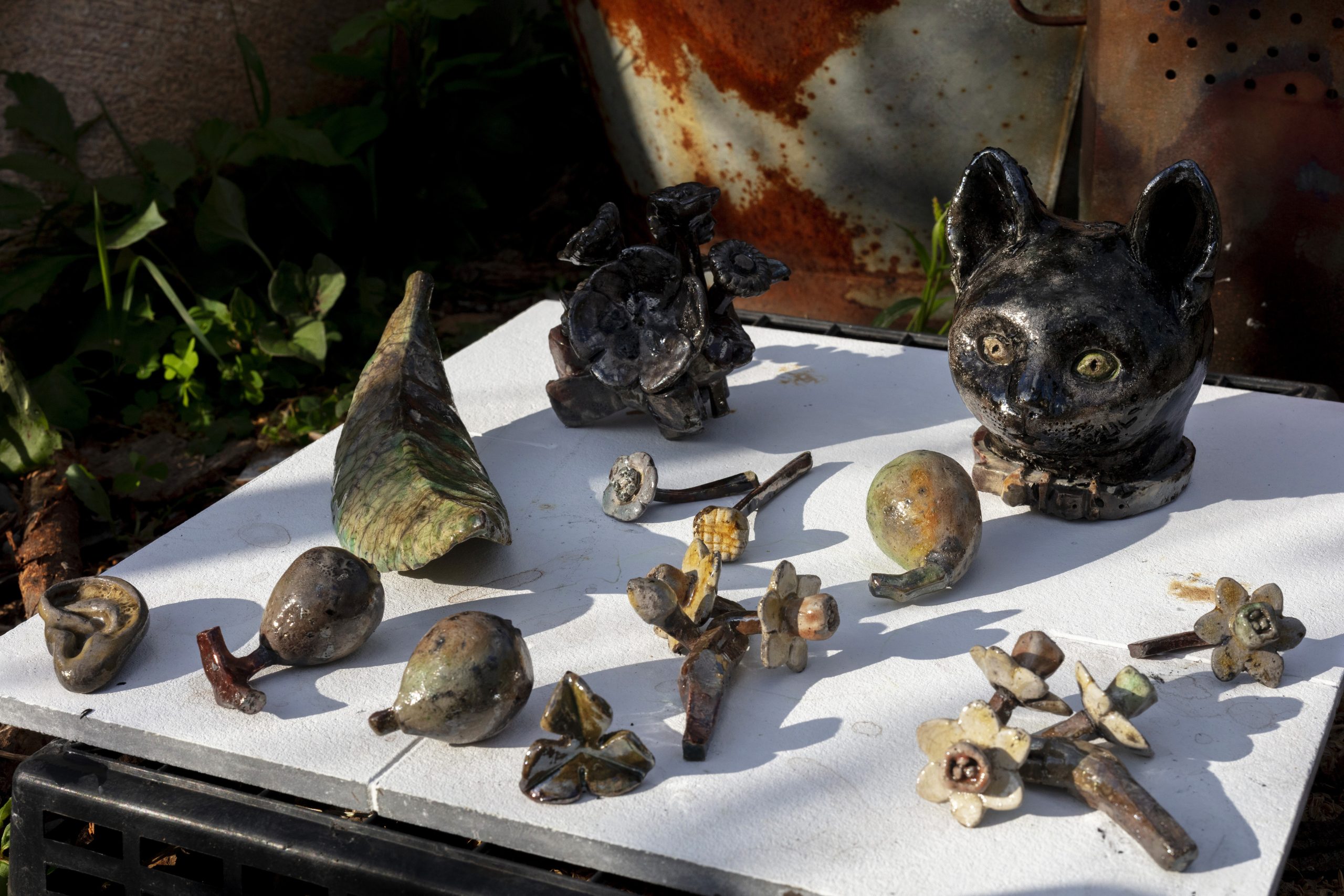
This spring, Hara Museum ARC will present Masako Ando: Ordinary Days in its special exhibition space Kankai Pavilion. Centered on an installation of approximately 150 small raku-fired pieces entitled The New Normal (2024), this exhibition showcases recent paintings (including work shown for the first time) and video art within the Japanese-style setting of the venue. Though small in scale, this show offers a valuable glimpse into the artist’s most recent explorations.
It was 14 years ago that Ando held The Garden of Belly Button (2012), a solo exhibition of pencil drawings and oil paintings at the Hara Museum of Contemporary Art in Tokyo, which closed in 2021. During a time when the artist felt psychologically detached from her earlier style of painting, she turned to the medium of ceramic reliefs to give physical form to painterly images, an effort that led to The New Normal installation of raku-fired ceramic pieces.
With raku, a technique that resonated with her state of mind, it was as if the small ceramic pieces that she made—flowers, apples, children’s feet, cats—had originated in the imaginary world of painting, but were extracted into the realm of reality through the use of her hands, clay and fire. Faced with the heartbreak of seemingly constant wars and disasters that plague the world, she refuses to succumb to that “new normal.” Instead, she “keeps her eyes focused on the burning fire and curling smoke, looking out for shiny fragments”*¹ that can be rescued one piece and one person at a time from the rubble.
*¹ Quoted from a conversation with Masako Ando.
Masako Ando
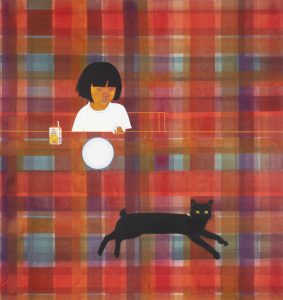
Born in Aichi prefecture in 1976 and based in the city of Seto, Ando’s major solo exhibitions include Hara Documents 9: Masako Ando – The Garden of Belly Button (Hara Museum of Contemporary Art, Tokyo, 2012) and Masako Ando: YUKUKAWA (Ichinomiya City Memorial Art Museum of Setsuko Migishi Aichi, 2023). She is currently an associate professor in the Oil Painting Department at the Aichi University of the Arts. She received the 74th Minister of Education, Culture, Sports, Science and Technology’s Art Encouragement Prize for New Artists in 2023. https://www.masakoando.com/
Related Events
-Supporting Members Event “Masako Ando Studio Visit” on May 31 (Sunday)
-“Meet the Artist: Masako Ando” on June 27 (Saturday) / June 28 (Sunday)
*Details to be posted on our official website at a later date.
Related Merchandise
The Museum Shop will be offering for purchase handkerchiefs featuring the exhibited work Carrot Juice.
*Details to be posted at a later date.
The List of Works
Reference
Interview regarding The Garden of Belly Button exhibition (Hara Museum of Contemporary Art, 2012)
https://www.art-it.asia/en/u/HaraMuseum_e/b2tinxckdiu910sata3r/
Press Release
Masako Ando: Ordinary Days
- Organized by
Hara Museum ARC
- Supported by
Nomura Foundation
- Cooperation provided by
Tomio Koyama Gallery
- Venue
Kankai Pavilion at Hara Museum ARC
- Hours
9:30 – 4:30 pm (last entry at 4:00 pm)
- Closed
Thursdays (except during the month of August)
- Admission
Masako Ando: Ordinary Days + How to Make a Rainbow
General 1,800 yen, Students 1,000 yen [high school and university] or 800 yen [elementary and junior high]
*Free for elementary and junior high school students in Gunma prefecture on Saturdays from3/15 to 5/11 and for Hara Museum ARC members.
*For advance online tickets (date-specific), go to https://e-tix.jp/haramuseum_arc/
Concurrent Exhibition
How to Make a Rainbow
This exhibition looks at the origins of the Hara Museum of Contemporary Art (1979–1990) which was created from scratch by museum chairman Toshio Hara at a time when contemporary art museums in Japan were rare. It looks back on the museum’s history of solo exhibitions by world-famous artists, support for emerging artists, and iconic permanent installations, tracing the evolution of the rainbow that became Hara Museum “ARC.”
For details, go here.